(Peer-Reviewed) QSAR Study and Molecular Design of Isoquinolone Derivative JNK1 Inhibitors
TONG Jian-Bo 仝建波 ¹ ², XIAO Xue-Chun 肖雪纯 ¹ ², LUO Ding 罗钉 ¹ ², XU Hai-Yin 徐海音 ¹ ², WANG Jie 王杰 ¹ ²
¹ College of Chemistry and Chemical Engineering, Shaanxi University of Science and Technology, Xi'an 710021, China
中国 西安 陕西科技大学化学与化工学院
² Shaanxi Key Laboratory of Chemical Additives for Industry, Xi'an 710021, China
中国 西安 陕西省轻化工助剂重点实验室
Abstract
JNK1 is a drug target for the treatment of type 2 diabetes, and it plays a key mediator role in metabolic disorders. In this paper, holographic quantitative structure-activity relationship (HQSAR) technology and Topomer comparative molecular field analysis (Topomer CoMFA) technology are used to analyze the quantitative structure-activity relationship (QSAR) of 39 isoquinolone derivatives. The cross validation correlation coefficient (q2) is 0.696 (Topomer CoMFA) and 0.826 (HQSAR), and the non-cross validation correlation coefficient (r2) is 0.935 (Topomer CoMFA) and 0.987 (HQSAR).
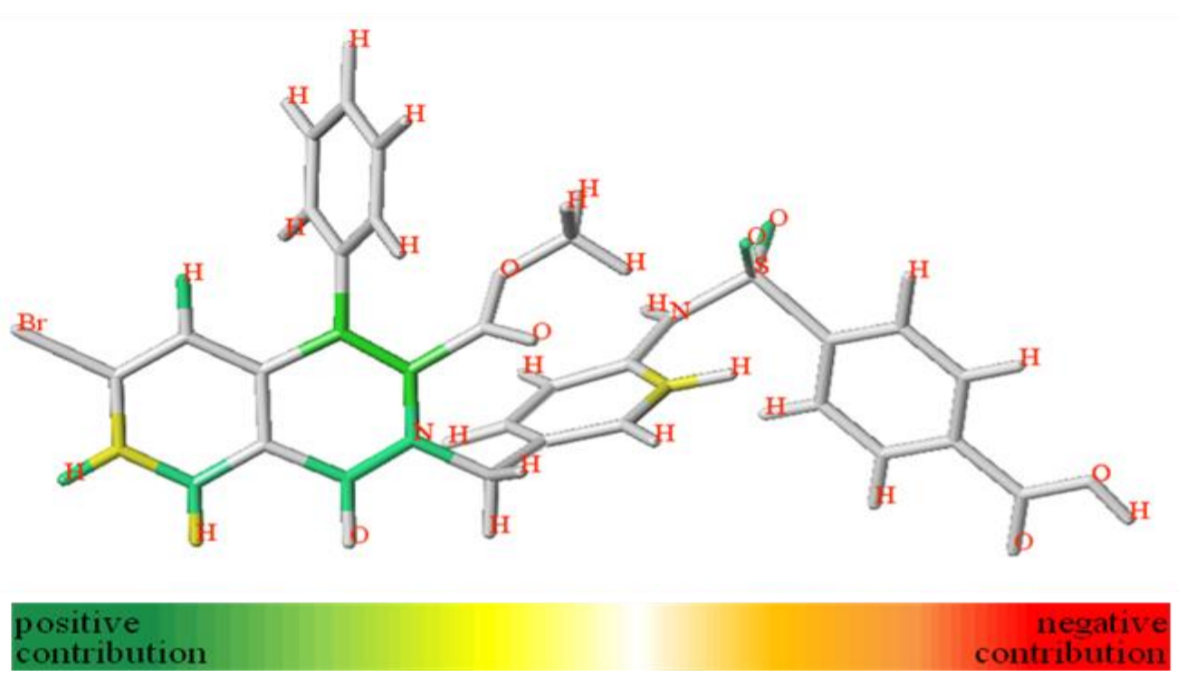
The results showed that the models have good stability and predictive ability. The Topomer search module was applied to define high contribution fragments in the ZINC database, designing 20 new isoquinolone compounds with theoretically high inhibitory activity. The molecular docking was carried out to explore the interaction between the ligand and target JNK1 protein. This study can provide a theoretical basis for the design of new JNK1 inhibitors.
Ultrafast all-optical modulation of wide-bandwidth pulses enabled by silicon-metasurfaces
Kaloyan Georgiev, Khosro Zangeneh Kamali, Anton A. Trifonov, Giulia Crotti, Lyuben Petrov, Stefan Georgiev, Hristo Iliev, Lei Xu, Unai Arregui Leon, Mohsen Rahmani, Giuseppe Della Valle, Ivan Buchvarov, Dragomir Neshev
Opto-Electronic Advances
2026-09-15
Physics-informed neural fields enable blind aberration correction for partially coherent quantitative phase imaging
Shun Zhou, Xingyu Huang, Linpeng Lu, Habib Ullah, Kaiyu Du, Maciej Trusiak, Malgorzata Kujawinska, Yuzhen Zhang, Yao Fan, Qian Chen, Qinrong Zhang, Chao Zuo
Opto-Electronic Science
2026-08-26
Heterogeneously integrated micro-ring with SnS₂ for dual-functional optical modulation and photodetection
Jinyi Du, Lidan Lu, Xu Zhang, Bofei Zhu, Wenbo Bo, Yingjie Xu, Guang Chen, Yanlin He, Guanghui Ren, Xiaoping Lou, Zheng You, Lianqing Zhu
Opto-Electronic Advances
2026-08-25
Hardware-aware lightweight photonic spiking neural network for pattern classification
Shuiying Xiang, Yahui Zhang, Shangxuan Shi, Haowen Zhao, Dianzhuang Zheng, Xingxing Guo, Yanan Han, Ye Tian, Liyue Zhang, Yuechun Shi, Yue Hao
Opto-Electronic Advances
2026-08-25
PhyspeNet: An empirical physics-aware network for adaptive speckle reconstructive spectrometry
Junrui Liang, Min Jiang, Jun Li, Zhongming Huang, Junhong He, Yanting Guo, Yanzhao Ke, Jun Ye, Jiangming Xu, Jinyong Leng, Pu Zhou
Opto-Electronic Advances
2026-08-25
A 36 × 240 Gbps hybrid mode/wavelength division multiplexing transmitter using lithium niobate on insulator
Mingyu Zhu, Weihan Wang, Ruitao Ma, Aoyun Gao, Chun Gao, Zexu Wang, Fei Huang, Zhenyuan Bao, Dajian Liu, Jiaxuan Gan, Zejie Yu, Huan Li, Weike Zhao, Daoxin Dai
Opto-Electronic Advances
2026-08-25